An EIP Noord-Holland 2025 project
One library for the images, annotations and models that weeding robots learn from.
A weeding robot is only as good as the variety of fields it has learned from, and no single farm has enough of them. So instead of every farm and every robot firm building its own training material, this library pools what exists and keeps it reusable: the field photos, the annotations drawn on them, the models trained from those. Each contribution stays in its owner's eVault — the library finds it there, it does not take it.
No account needed to look around. Sign in with your eID to see your own fields and photos.
Three kinds of material, one place to pick from
In each case you do the same thing: narrow the library to the slice you need — a crop, a weed, a dataset, a field — and take it where you work.
Images
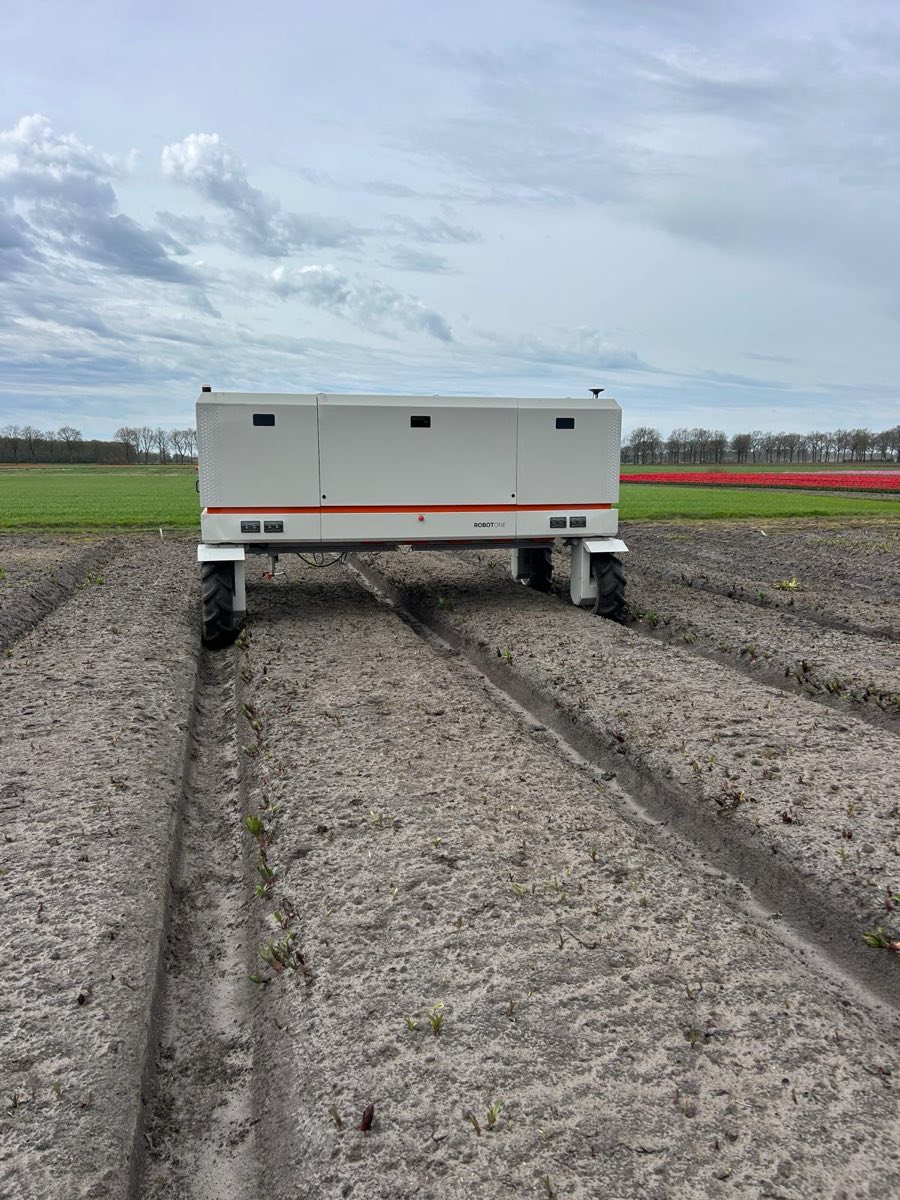
Field photos of crops and weeds from robot passes and field visits. Tick klein onkruid and you see which datasets hold it, how many photos each has, and which fields they came from.
159,528 photos across 12 datasets and 13 eVaults, under 46 crop and weed labels.
Annotations
The outlines around each plant — what a recognition model actually trains on. Two ways in: bring sets you have already labelled, or select photos here and open them in CVAT, the open-source annotation tool, with the result coming back to the library.
Until those land, the library holds images and labels, not outlines.
Models
Trained on sets assembled here, each model carries what it learned from — crops, weeds, soils, growth stages, cameras — so a robot builder can judge the fit before putting one on a machine.
Which crops come first depends on what people ask for now.
Open it and look
What is in the library today, and the map it all sits on.
Live data, 4 October 2026.
A photo is only useful if you know the field it came from
A model that works on spinach on sand can fail on lilies on clay, or on the same crop three weeks later. So every photo here sits on its real parcel, with the registered crop from RVO and 28 open-data layers underneath it — soil, water, elevation, land use, nature zones, weather.
So you can ask for images by the conditions you care about, not only by species.
And it stays yours. Sign in with your eID and your parcels, robot tracks and photos are read straight from your eVault. You choose which of your vaults are read and by whom. There is no central copy: revoke access and reading stops.
Most declared weeds, by photos
- klein onkruid84,809
- kiemonkruid61,036
- aardappelopslag30,276
- ridderzuring24,409
- onkruid middel22,963
First candidates for annotation.
What the library needs next
Two things decide how fast usable models appear: annotations, and imagery from fields unlike the ones already here.
Photos from crops, soils and seasons the library has not seen are worth most — those are the conditions where a model trained elsewhere fails on your fields. They stay in your vault, read only by whom you allow.
Open the map →Annotation sets made for your own training runs can come in as they are from mid-October, instead of the same plants being outlined a second time by someone else.
Write to the project →From the end of October a set picked in the library opens directly in CVAT. Every object carries the eVault it came from, so the work stays attributed to whoever did it.
Write to the project →The full catalogue is open, with counts per label and per dataset, so you can see what is here before you commit to a training run. Tell us which crops and conditions your machines must handle — that decides which labels get annotated first.
Read the catalogue →